
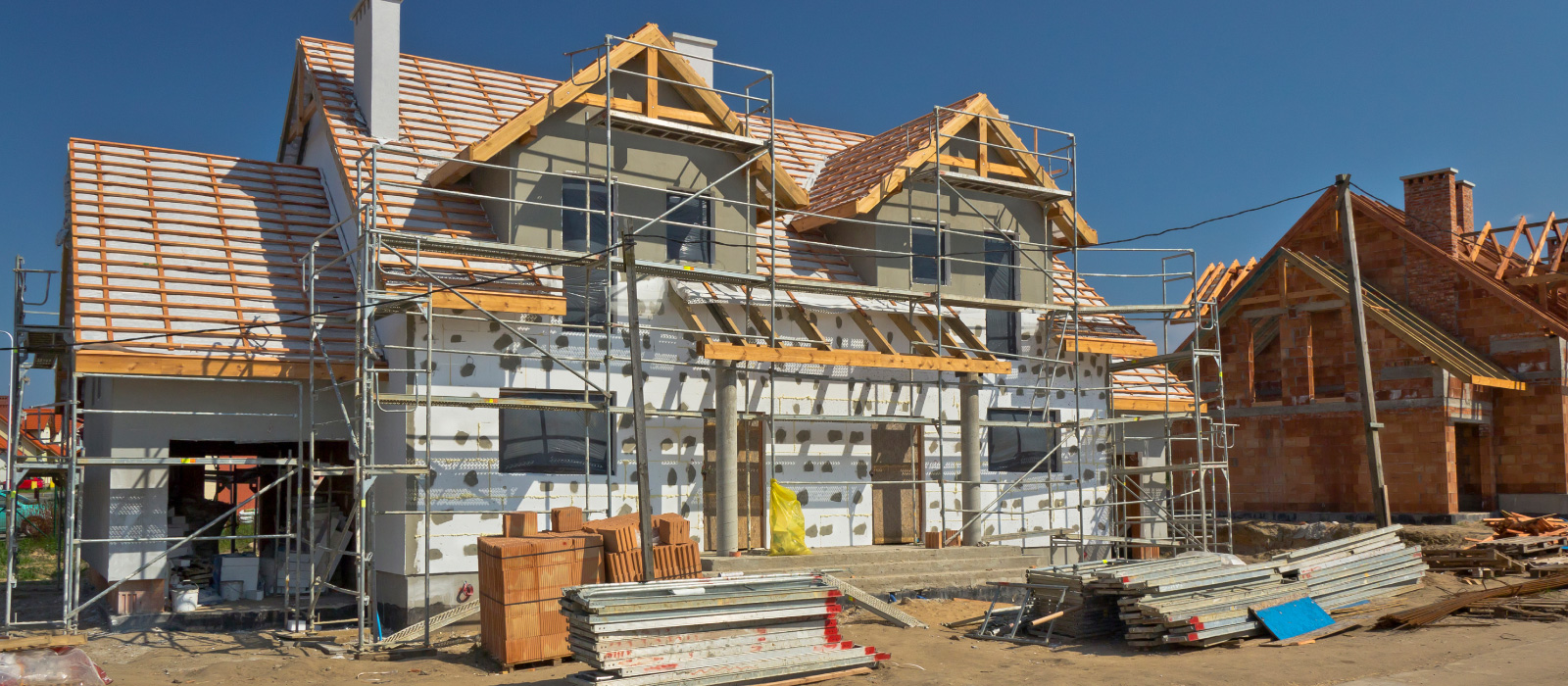
Construction Loans financing in Nashville

Loan Program

Construction Loans in Nashville, TN

Hard money loans for new construction projects

Program Overview

Nashville's construction market has been one of the most active in the Southeast for the better part of a decade. The residential supply shortfall that developed during the migration wave created strong demand for new construction across price points — from entry-level townhomes in suburban Williamson County to luxury custom estates in Belle Meade and Forest Hills. That demand has not evaporated, and Middle Tennessee's population growth trajectory continues to support new construction starts for developers and builders who can execute efficiently.

At Hard Money Lenders of Nashville, construction loans fund ground-up residential and small commercial projects where the borrower needs speed, flexibility, and a lender who understands how construction actually works. Institutional construction lending is slow, documentation-intensive, and frequently structured by people who have never walked a job site. We are different. We evaluate your project based on the budget integrity, the completed-value support, your track record, and the practicality of your timeline — and we structure draws to support your project's actual cash flow needs rather than a rigid bank disbursement schedule.

Williamson County's ultra-luxury wave has created a specific construction niche: custom homes and spec construction in the $1.5M-$5M+ range in Brentwood, Forest Hills, and Franklin's most desirable neighborhoods. These projects have deep-pocketed end buyers but complex scopes, long timelines, and subcontractor coordination demands that test any lender's patience and flexibility. We have experience with this project type and we structure accordingly.

Nashville's general construction market also benefits from strong industrial and commercial demand driven by logistics, healthcare, and corporate expansion. Small commercial construction — medical office, flex industrial, neighborhood retail — serves the same population-growth demand that drives residential construction, and our commercial construction programs accommodate these project types across the metro.

How Investors Use It

Spec residential construction is the most active construction lending category in Middle Tennessee. You acquire a lot, pull permits, and build a home for sale to an end buyer. The construction loan funds the build period — typically 9-18 months — and the exit is the sale of the completed home. We fund spec construction for single homes and for small builders running three to five concurrent projects.

Custom home construction serves buyers who have purchased land and are building to their specifications. The financing structure is similar to spec construction — draw-based funding released against completed work — but the exit is a permanent mortgage for the homeowner rather than a market sale. We bridge the construction period until the permanent financing is in place.

Ground-up multifamily construction addresses Nashville's apartment supply dynamics. Smaller-scale multifamily — 8 to 30 units — is a development category that is underserved by large institutional construction lenders and often fits well in our hard money program. These projects produce rental income at completion that supports DSCR refinancing, and the construction period is short enough to accommodate our loan terms.

Williamson County luxury construction serves the estate and premium custom market in Brentwood, Franklin, and Forest Hills. These projects command the highest per-square-foot construction costs in Middle Tennessee and also the highest completed values. Our construction loans accommodate longer timelines and larger budgets for qualified luxury builders and developers.

Townhome and attached residential development in Nashville's urban core and suburban growth corridors produces strong buyer demand and efficient lot utilization. Townhome construction in neighborhoods like Berry Hill, Wedgewood-Houston, and East Nashville serves the price-point buyer who wants an urban address but cannot access the single-family home prices in established Nashville neighborhoods.

Small commercial construction — medical office, flex industrial, and neighborhood retail — serves the employment and service demand generated by Nashville's population growth. These projects are often straightforward in scope and produce income-generating assets that refinance into commercial loans at completion.

Common Challenges

Budget integrity is the critical construction lending variable. Nashville's construction cost environment has been volatile — labor costs are higher than pre-migration levels, material prices have fluctuated, and subcontractor availability in specialized trades creates schedule risk that adds carrying cost. We underwrite construction budgets conservatively and require appropriate contingency reserves rather than underwriting to an optimistic scenario that has no margin for cost overruns.

Permitting timelines through Metro Nashville have been a consistent project risk. Inspections, permit processing, and plan review can add weeks or months to a project that looked straightforward on paper. We include permit delay assumptions in timeline projections rather than scheduling draws against an optimistic completion date that assumes everything moves smoothly.

Subcontractor reliability is a real operational risk in Nashville's active construction market. Strong subcontractors — framers, plumbers, electricians, HVAC installers — are booked well in advance, and projects that lose a subcontractor mid-build face significant delays. Experienced builders manage this risk through relationships and scheduling; first-time builders often learn it the hard way.

Completed-value support requires realistic comparable analysis. Construction loans underwritten against inflated ARV assumptions create risk for both the borrower and the lender when the completed home or building does not appraise at the projected value. We use conservative comparable analysis and require appraisal support from appraisers familiar with the specific submarket.

Lending Partner Approach

Construction loan evaluation focuses on four things: the budget, the completed value, the timeline, and the borrower's ability to execute. We want to see a detailed construction budget with line-item costs, a realistic schedule, a qualified general contractor or builder, and comparable sales that support the projected completed value.

We draw down the construction loan in milestone-based stages. You request a draw, we schedule an inspection to confirm completed work, and funds are wired within 48-72 hours of inspection approval. The draw schedule is structured around your project's actual milestones — foundation, framing, rough mechanical, drywall, and finishes — rather than arbitrary calendar intervals.

We offer extensions when projects encounter legitimate delays and communicate clearly about what extensions cost and how they are structured. Construction always encounters surprises, and we would rather manage through those surprises with our borrowers than push them into completion pressure that compromises project quality.

Nashville Market Context

We finance construction projects across Nashville and Middle Tennessee — Davidson County spec and custom residential, Williamson County luxury construction in Brentwood and Franklin, suburban townhome and multifamily development in Spring Hill, Nolensville, and Hendersonville, and commercial construction serving Nashville's employment and services growth.

Common Questions

Frequently Asked Questions

Do you fund 100% of construction costs?

We typically do not fund 100% of construction costs. Most structures require the borrower to contribute equity — either in the form of the land value or a cash contribution — and we fund the construction draw facility from that basis. The exact leverage depends on the completed-value LTV and the project fundamentals.

How does the draw process work for construction loans?

Draws are milestone-based. You request a draw, we order an inspection to verify completed work, and funds are wired within 48-72 hours of inspection approval. The draw schedule is established at closing and reflects your project's actual construction sequence. We do not hold draws arbitrarily or require extensive documentation for each disbursement.

What experience level do you require for construction borrowers?

Experience matters in construction lending. First-time builders can qualify for smaller, straightforward projects with appropriate conservative leverage and a qualified general contractor. Experienced builders with completed project track records typically qualify for better terms and more flexibility. We ask about prior construction experience and factor it into the underwriting.

Can you fund construction on land I already own?

Yes. If you own the lot unencumbered, we can structure a construction loan that uses the land equity as part of the capital stack. The land value is credited toward your equity contribution, and we fund the construction draws. This is a common structure for investors who assembled lots in advance of the construction decision.

How do you handle budget overruns during construction?

We build contingency into the original budget — typically 10-15% for residential and more for complex commercial projects. If costs exceed the contingency, we evaluate additional funding requests based on the completed value and the situation. The best approach is to build honest budgets from the start with adequate contingency rather than discovering overruns mid-project with no buffer.

Ready to Request Quotes for Your Construction Loans?

Share the property details and timeline. We will route your inquiry to participating lenders who may be able to help.